How We Ride
Rules of the Road
Obey ALL traffic laws.
Safety is a primary concern, and participating in a Club ride is an implicit agreement to abide by these norms and practices.
“Share the Road” is a two-way street; act with respect and courtesy towards everyone on the road.
Ride cautiously and consistently so that others can predict your movements and respond safely.
Helmets, ID, and medical and emergency contact information are mandatory on all Club rides.
The use of daytime running lights is highly encouraged on all Club rides.
The use of earbuds, headphones or cell phones while riding is not permitted. It just isn’t safe to bicycle without our full attention on the task at hand.
Clear and effective communication is a requirement of group riding. It includes signaling things such as hazards, turning, passing, slowing, stopping, and the presence of oncoming vehicles. It also includes exemplifying and politely advocating for safe and cautious cycling.
Paceline Best Practices
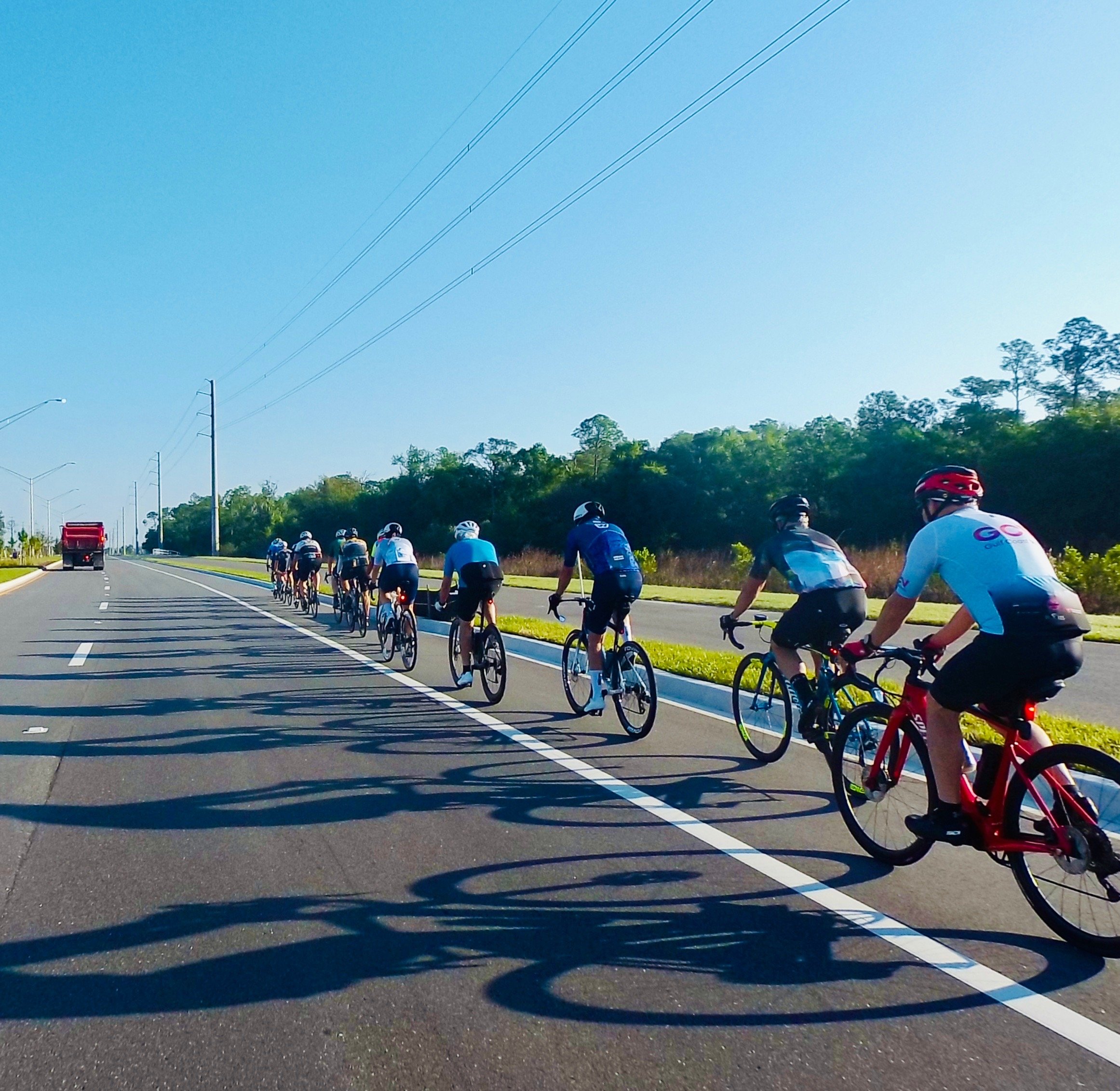
The goal of a paceline is smooth, predictable riding that keeps everyone safe and makes the workload easier. These are shared habits, not hard rules. The smoothest paceline is the one where riders look out for each other.
Be on time for the start.
Be prepared. A properly functioning bike. Front and rear lights, when warranted.
Ride within your capabilities.
Before the Ride
Maintain steady power and a bike length, or less, gap behind the rider you're following.
One eye past the rider in front of you will help you anticipate conditions and events.
Avoid overlapping wheels. If it happens, alert the rider you've crossed and correct yourself smoothly, without panic.
Stay predictable, attentive, and considerate to the riders around you.
Positioning and Awareness
Avoid braking in the paceline when not necessary.
If you must brake or stop, call it out clearly.
Communicate hazards, debris, turns, and slowdowns clearly and early.
Monkey see, monkey do. The rider behind you can't see the signals of the rider in front of you.
Braking and Hazards
When you're pulling, you are the ride leader for that time.
Maintain a steady pace/ effort. Communicate hazards, debris, turns and slowdowns early.
No surging when taking over the pull or exiting corners. Ease into the pace and hold the group's rhythm.
Signal clearly when rotating out. Don't drop your pace until you're clear of the rider behind and off to the side of the paceline. Elbow flick to the side you want the group to pass you. If strong crosswind, pull off into the wind.
Pulls are typically about one mile. Shorter pulls, especially into headwinds, make sense if it helps you maintain the paceline's rhythm. Monopolizing a tailwind with an unusually long pull is not cool. On the other hand, taking a long pull into a headwind will probably get someone else to buy your coffee.
Call out "all on", or "all aboard" when you are the last rider and have caught up to the paceline that has slowed its speed for you.
Pulling and Rotating Back
Call out issues calmly and clearly. Speak up early if something feels off.
Take coaching and advice in the spirit it's given. Feedback is about safety and group flow, not individual ability.
Download the document below to view/print our most common paceline terminology.
Communication and Mindset


Have Questions? Interested in Leading a Ride or Becoming a Ride Leader?